

Same Day Repair for Windscreen Chips
A stone flicks up on the M3, the windscreen makes that sharp little ping, and there it is: a chip directly in your line of sight. It may be no bigger than a coin, but leaving it for a week of commuting, frosty mornings or motorway miles can turn a repairable mark into a crack. Same day repair is about dealing with that risk while the damage is still small - without giving up a day to sit in a fitting centre.
For drivers across Hampshire, Surrey and Berkshire, a mobile chip repair can usually be carried out at home or at work. Most suitable repairs take around 20 to 30 minutes. The key word is suitable: a quick repair is only worthwhile when the chip can be repaired properly, safely and with a lasting result.
When does same day repair make sense?
A windscreen chip is not just cosmetic damage. Your windscreen contributes to the vehicle’s structure and supports the passenger-side airbag in many cars. A chip weakens a small area of glass; heat, cold, vibration and road movement can then encourage it to spread.
The practical rule is simple: act before the chip becomes a crack. Same day repair is especially sensible if the damage is fresh, you need the car for work or family travel, or you can see signs that a small mark is starting to develop lines.
It also makes financial sense. Repairing a chip is normally far less costly than replacing a whole windscreen, and it keeps the original factory-fitted glass in place. For prestige, classic and performance vehicles, preserving original glass can be particularly valuable.
That said, not every windscreen mark is a same day repair job. An honest assessment comes first. If the damage is beyond a safe repair limit, replacement may be the correct option. A specialist should tell you that clearly rather than attempt a repair that will not hold.
What windscreen damage can be repaired?
Mobile chip repair is designed for defined, localised damage. Common repairable types include bullseye chips, half-moon chips, petal breaks, star breaks, cross-hair damage and small long cracks. The exact result depends on the chip’s shape, age, contamination and location, but the aim is always the same: stabilise the glass, restore structural integrity and make the damage much less noticeable.
Size and position matter. As a general guide, damage larger than a £2 coin is often beyond repair limits. Cracks reaching the edge of the windscreen are another concern because the edge is under greater stress. Damage in a critical driver viewing area may also need a more careful judgement, even where the chip itself is small.
A fresh chip is usually the best candidate. Dirt and water can work their way into an open break, making the finished appearance less clean. This does not automatically rule out a repair, but it is why covering the chip with clear tape and arranging an assessment promptly is a sensible move. Do not press tape into the damage, and avoid washing the vehicle or blasting the windscreen with hot air before the technician has seen it.
How a mobile same day repair works
You do not need to guess whether your chip can be fixed. Send a clear WhatsApp photo showing the damage from outside and, if possible, a second photo from inside the car. Include the vehicle registration, your postcode and a brief note on when the chip happened. That gives a trained Chipper the information needed for a quick initial assessment.
If the damage looks eligible, you can arrange a convenient slot at your home or workplace. The vehicle needs to be accessible, with enough room around the front and protection from heavy rain where possible. A dry repair area helps the resin bond correctly.
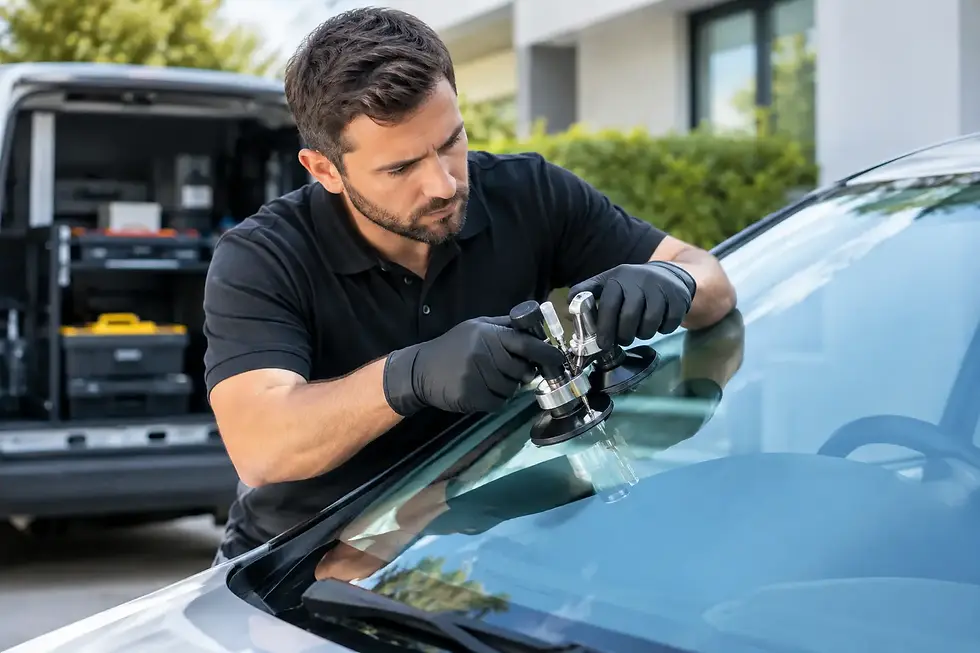
On arrival, the technician examines the damage in person. This is the final check, because a photograph cannot always show every fracture line or reveal whether moisture has entered the break. If repair is suitable, the damaged area is cleaned and prepared before professional-grade Delta repair resin is introduced under controlled pressure.
The resin fills the break, is cured with ultraviolet light and the surface is finished smooth. The process strengthens the damaged area and prevents the chip from continuing into a larger crack. The repair will often be far less visible afterwards, though no reputable specialist should promise that every chip will disappear completely. A faint outline, small blemish or light distortion can remain, particularly with older or more complex damage.
That is a fair trade-off. The purpose of repair is first to make the windscreen safe and stable, then to improve its appearance. Waiting for a perfect-looking chip to become a full crack is rarely the cheaper option.
Why repair before replacement?
Replacement has its place. A large crack, edge damage or severely compromised windscreen may require it. But replacement also means removing serviceable original glass, arranging a longer fitting appointment and, on modern vehicles, potentially dealing with cameras, sensors and calibration.
For a repairable stone chip, keeping the existing windscreen is often faster, simpler and lower waste. A 20 to 30-minute repair at your driveway or office car park can avoid the disruption of arranging a replacement vehicle slot. It also prevents an otherwise usable windscreen becoming landfill.
This is not about cutting corners. It is about using the right solution for the damage in front of you. A proper resin repair is a specialist job, not the same as applying a DIY kit from a shelf. The quality of the resin, the pressure cycle, the preparation and the technician’s judgement all affect the result.
What to do while you wait for repair
The first few hours after a chip appears can make a difference. Keep the damage as clean and dry as you reasonably can. A small piece of clear tape over the outside of the chip can help keep out moisture and grit until it is assessed.
Try not to create sudden temperature changes. Avoid pouring hot water over an icy windscreen, directing the heater at full power straight onto the chip, or using a high-pressure wash. You cannot always avoid travelling, of course, but gentle driving and avoiding potholes where practical may reduce the chance of the damage spreading.
Do not pick at loose glass or try to push resin into the chip yourself. DIY kits can occasionally help in limited circumstances, but they can also trap dirt or make professional repair harder if the application goes wrong. If you want the best chance of saving the windscreen, have it inspected first.
Clear pricing and a proper decision
No one wants to book a repair only to discover unexpected costs on the day. A straightforward mobile specialist should explain the price based on the number of chips and their size, then confirm whether the glass is eligible before work begins.
A photo assessment is useful for speed, but it should never be sold as a guarantee that every mark can be repaired. The final decision has to be made with the windscreen in front of the technician. That is not a delay tactic; it is how a responsible repairer protects you from paying for unsuitable work.
Chip Repair UK focuses solely on mobile windscreen chip repairs, rather than trying to sell a replacement when a repair will do. That means a practical answer, fixed-price clarity and a repair-aftercare guarantee for eligible work. If the chip cannot be repaired, you should be told plainly.
Book before the chip chooses for you
A chip can sit quietly for days, then spread across the glass after one cold night or a bump in the road. There is no reliable way to predict when that will happen. If the damage is small enough to be repairable now, sending a photo today gives you the best chance of keeping the job quick, affordable and local.
Call Billy, send a WhatsApp photo or book a convenient mobile visit. A short repair now can save a windscreen, a replacement bill and a much more inconvenient week.


Comments