

Can an Edge Crack Be Repaired on a Windscreen?
A crack that starts close to the black border of your windscreen can be worrying, particularly when it seems small at first. So, can an edge crack be repaired? In most cases, no. An edge crack is usually outside the safe limits for a resin repair because of where it sits on the glass and the extra stress placed on that area of the windscreen.
That does not mean you have done anything wrong, or that every mark near the edge will immediately need a new screen. A trained chip repair specialist needs to look at the exact damage first. The key is acting quickly, before vibration, temperature changes and everyday driving allow a small chip or crack to travel further.
Why windscreen edge cracks are different
Your windscreen is not just a piece of glass. It is a laminated safety component that contributes to the strength of the vehicle cabin. The outer glass, plastic interlayer and inner glass work together, which is why a damaged screen needs a proper assessment rather than a quick DIY fix.
The outer edge of the windscreen is especially important. It is bonded into the vehicle frame and is subject to constant pressure from the body of the car. Potholes, speed bumps, uneven road surfaces and even shutting a door can flex the glass slightly. A crack near the edge is more likely to spread because it begins in this high-stress zone.
Resin repairs work best when they can be injected cleanly into a contained chip or short crack, then cured to restore strength and reduce its appearance. With an edge crack, the damage may run into the concealed section of glass beneath the trim or reach the bonded area. That makes it difficult to assess fully and unsuitable for a dependable repair.
Can an edge crack be repaired safely?
A proper answer depends on the exact position and size of the damage, but a true edge crack should normally be treated as non-repairable. Attempting to inject resin into damage that extends to the windscreen edge can leave you with a crack that keeps moving, particularly during cold mornings or a hot afternoon with the heater or air conditioning running.
It is tempting to judge the damage by what you can see from the driver’s seat. Unfortunately, the visible line is not always the whole story. The crack may continue beneath the rubber, trim or black ceramic band around the screen. A specialist will consider how close the damage is to the edge, whether it has reached it, how long it is, whether there are multiple legs, and whether the glass is contaminated with dirt or moisture.
This is why a reputable repairer should be clear about their limits. Repairing an ineligible crack may seem cheaper in the moment, but it can cost more when the crack spreads and replacement becomes unavoidable anyway.
What counts as an edge crack?
An edge crack is generally a crack that reaches, or begins very close to, the perimeter of the windscreen. The exact repair limits can vary by vehicle and the shape of the damage, so there is no sensible one-size-fits-all measurement for every car.
A chip near the outer area of the glass is not automatically an edge crack. For example, a contained bullseye, half-moon, petal, star or small cross-hair chip may still be repairable if it is well clear of the actual edge and within safe size limits. Likewise, some small long cracks can be assessed for repair when they are away from the edge and have not travelled too far.
The distinction matters. A chip is a localised impact mark, often with a central point of impact. A crack is a line through the glass. Once that line leads into the edge zone, the risk changes significantly.
What to do when you spot a crack near the edge
Do not press on the glass, pick at the impact point or try to force resin from a shop-bought kit into the crack. DIY kits can be useful only for limited, clean and suitable chips. They cannot change the structural limitations of an edge crack, and poorly applied resin can make professional assessment harder.
Keep the area as dry and clean as you reasonably can. If the damage is a chip with an open impact point, a small piece of clear tape can help keep out water and dirt until it is assessed. Do not use tape on a wet windscreen, and do not place anything over a crack that could trap moisture.
Avoid sudden temperature changes where possible. Do not blast a cold windscreen with maximum heat, and do not pour hot water over it to remove frost. Park in the shade when practical, drive gently over rough roads, and book an assessment promptly. These steps cannot reverse a crack, but they may reduce the chance of it running further before you know your options.
Repair or replacement: the practical decision
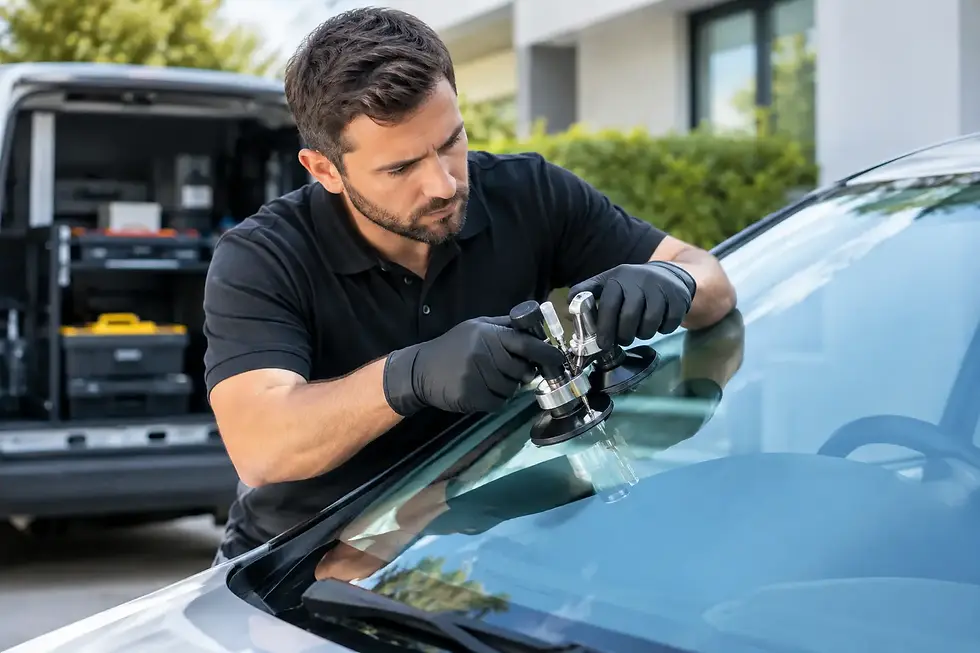
For an eligible stone chip, repair is usually the quickest and lower-waste choice. A mobile repair can often be completed at your home or workplace in around 20 to 30 minutes, preserving the original factory-fitted glass and avoiding the disruption of a replacement appointment.
For a genuine edge crack, replacement is normally the safer route. The windscreen must be removed and a new one bonded correctly to the vehicle. This is not a failure of repair technology. It is the right decision when the damaged area sits in a part of the screen that carries too much stress for resin repair to provide a reliable result.
There is also the question of visibility. Damage in the driver’s direct view may need extra care even if it is technically repairable, as a resin repair can improve the look substantially but may not make a mark invisible. Safety, structural condition and clear vision come before a cosmetic improvement.
How a photo assessment saves wasted time
The quickest way to establish whether you are dealing with a repairable chip or an edge crack is to send clear photos before booking. Take one photo from outside the car and one from inside, including enough of the windscreen edge to show where the damage sits. A third photo from a slight angle can help show the shape and depth of the impact.
Include a familiar size reference, such as a £2 coin, held beside the damage rather than over it. Mention whether the damage has changed, whether the screen has been wet, and your vehicle registration, make and model if requested. A good assessment will give you a straightforward answer instead of promising a repair before the damage has been seen.
For drivers in Hampshire, Surrey and Berkshire, Chip Repair UK can assess suitable stone chips from a WhatsApp photo and arrange a convenient mobile visit. If the photo indicates an edge crack or damage beyond safe repair limits, you will be told plainly rather than charged for a repair that should not be attempted.
How to prevent a small chip becoming a bigger problem
Not every cracked windscreen starts as an edge crack. Many begin as an ordinary stone chip that was left through a few days of commuting. Catching an eligible chip early gives you the best chance of keeping the original screen.
Watch for fresh impacts after motorway journeys, roadworks or following lorries. Check the windscreen in daylight, especially around the lower corners where dirt can hide a new mark. If you see a chip, do not wait for it to become a long line across the glass. Send a photo, get a clear answer, and arrange repair while the damage is still contained.
An edge crack may not be a repair job, but knowing that early helps you make the right next move. If you are unsure whether your damage reaches the edge, take a couple of clear photos and ask. A quick, honest assessment is better than hoping the crack stays where it is.


Comments