
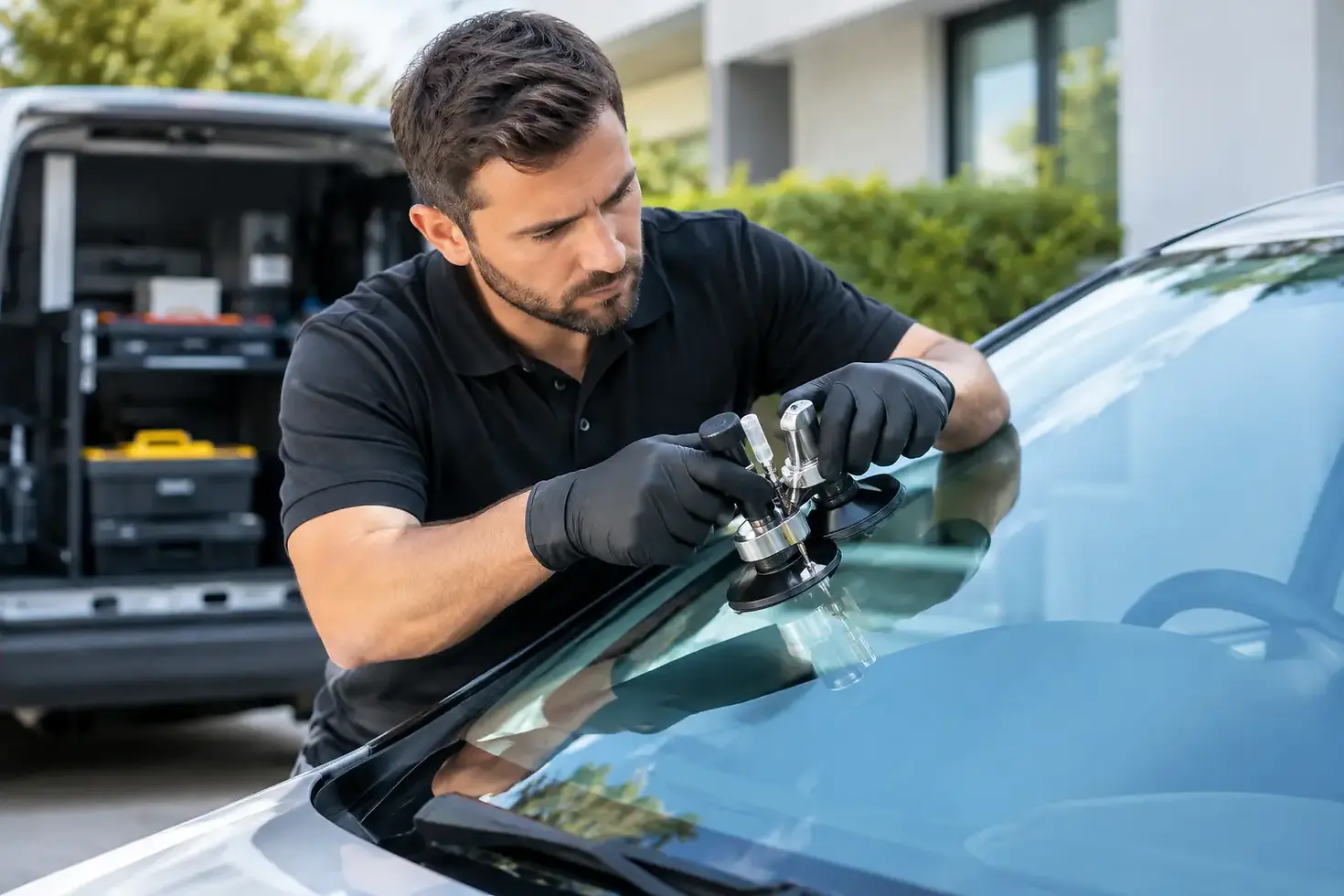
Mobile Windscreen Repair at Home or Work
A stone flicks up on the M3, the A331 or a local road and leaves a mark in your glass. It may look small now, but a mobile windscreen chip repair is usually far easier, quicker and cheaper before that mark turns into a spreading crack. There is no need to spend half a day at a glass depot if the damage is suitable for repair. A trained specialist can come to your home or workplace and deal with it while you get on with your day.
For drivers across Hampshire, Surrey and Berkshire, the sensible first step is simple: take a clear photo of the damage and send it over on WhatsApp. You can then get a straight answer on whether it is repairable, what it will cost and when the work can be done.
When can a mobile windscreen repair be done?
Most windscreen chips can be repaired successfully when they are treated early. The key issue is not just how the damage looks from the outside. Its size, shape, position and whether dirt or moisture has entered the break all matter.
A mobile chip repair specialist will commonly be able to repair bullseye, half-moon, petal, star and cross-hair chips. Small long cracks can also be repairable in the right circumstances. The aim is to stop the damage travelling through the glass, strengthen the damaged area and make the chip far less noticeable.
There are limits, and any honest repairer should be clear about them. Damage larger than a £2 coin is normally beyond the sensible repair threshold. Cracks that reach the edge of the windscreen are also a concern because the edge is under greater stress and a repair may not hold reliably. If a chip sits directly in the driver’s critical viewing area, the final appearance and MOT implications need careful consideration too.
That is why a photo assessment is useful. It avoids guesswork, avoids wasted journeys and means you know where you stand before booking. If your windscreen needs replacing rather than repairing, it is better to know that promptly than to pay for a visit which cannot solve the problem.
Why small chips should not be left
Windscreen glass is laminated, with layers designed to keep the screen together. A chip can still weaken the outer layer enough for a crack to develop. Changes in temperature are a common trigger. A cold morning followed by a hot demister, direct summer sun, a speed bump or the flex of everyday driving can all put pressure on damaged glass.
Once a crack begins to run, repair may no longer be an option. Replacement takes longer, costs more and can mean arranging time without your car. For owners of classic, prestige and performance vehicles, keeping the original factory glass can be particularly worthwhile where possible.
There is also the practical issue of contamination. Rainwater, screenwash, road grime and cleaning products can work their way into an open chip. The cleaner and drier the damage is when repaired, the better the resin can bond inside it. You do not need to panic, but you should avoid pressing on the chip, blasting it with hot air or repeatedly washing over it until it has been assessed.
How a mobile windscreen chip repair works
A proper repair is not just resin dabbed over the surface. The damaged area is inspected first to check that repair remains appropriate. The technician cleans and prepares the chip, then uses a professional repair system to draw air and moisture from the break before injecting a clear resin under controlled pressure.
At Chip Repair UK, trained Chippers use Delta repair resin designed to flow into the fine fractures created by impact damage. Once the resin has filled the chip, it is cured and the surface is finished smooth. The process helps restore strength to the damaged section and prevents the break from spreading in normal use.
The appearance improves significantly in most cases, although no reputable repairer should promise an invisible result. A chip has physically damaged the glass, and faint marks can remain depending on its type, age and contamination. The main purpose is to stabilise the damage, with the cosmetic improvement an important added benefit.
Most eligible repairs take around 20 to 30 minutes. You do not need a workshop appointment, a waiting room or a lift home. As long as there is safe access to the vehicle and suitable conditions for the work, the repair can be carried out on your drive, at your workplace or another agreed location.
A quick check before the technician arrives
If you can, keep the damaged area dry and clean. A small piece of clear tape placed gently over the chip can help prevent dirt getting in, but do not use glue, filler, nail varnish or a DIY windscreen kit first. These products can make professional repair more difficult and may reduce the quality of the result.
Park where the vehicle can be accessed safely and make sure the windscreen is not covered in ice, snow or heavy condensation. If the weather is particularly wet or extreme, the appointment may need to be adjusted. That is not inconvenience for its own sake - resin work needs the right conditions to give the repair the best chance of lasting.
Mobile windscreen repair versus replacement
Repair and replacement are not competing versions of the same job. They suit different types of damage. If a chip is within repair limits, repairing the existing glass is generally the faster and lower-waste choice. It also preserves the original windscreen and avoids the wider work involved in removing and refitting a screen.
Replacement is necessary when damage is too large, reaches an edge, compromises safe vision or has developed into a substantial crack. A specialist repair service should not pretend otherwise. The value of a repair-first approach is that you get a clear, practical decision based on the condition of your glass, not a default push towards a more expensive job.
For many drivers, the difference is also about disruption. A repair can often fit around a working day, school run or busy week. Rather than taking time off to sit at a fitting centre, you can have the damage dealt with where the car already is.
What affects the cost of a repair?
The number of chips and their size are the main factors. A single standard chip is a straightforward job. Multiple impacts take longer because each one must be assessed, prepared and filled properly. Larger but still eligible damage may also need more work than a small, fresh stone chip.
Clear fixed pricing matters. It lets you decide without worrying that a call-out fee, workshop overhead or surprise extra will appear later. Mobile repair businesses can often keep costs more sensible than national replacement-led chains because they focus on one specialist job and do not carry the same workshop costs.
The cheapest option is not always the right one, though. Ask whether the repairer sets clear limits, uses professional-grade resin, explains what can realistically be achieved and stands behind the work. A rushed repair that leaves contamination inside the break is poor value, even if the initial price looks tempting.
Getting a fast answer in Hampshire, Surrey and Berkshire
You do not need technical knowledge to arrange an assessment. Take one photo close to the chip and one from a short distance away, ideally with good natural light. Include a £1 coin or £2 coin beside the damage if you can, as this helps show its scale. Mention the vehicle, your town and whether the damage has started to crack.
A WhatsApp photo is often the quickest way to find out if a repair is possible. It is particularly handy for drivers in Fleet, Farnborough, Aldershot, Camberley, Bracknell, Basingstoke, Maidenhead, Ascot and nearby areas who need a prompt answer without making a speculative journey.
If it is repairable, arrange a time and place that works for you. If it is not, you will have a clear explanation of why. That is the no-nonsense advantage of using a mobile chip repair specialist rather than hoping a small mark will stay small.
A windscreen chip rarely improves by being ignored. Send a photo, get a proper assessment and, if the glass is eligible, have it repaired before the next cold morning or rough stretch of road makes the decision for you.


Comments