

Professional Resin Versus DIY Kits Compared
A small stone chip can look like a simple job: buy a kit, follow a few instructions and carry on. But professional resin versus DIY kits is not just a question of cost. It is about whether the damage is properly cleaned, filled and cured before vibration, rain and temperature changes turn a repairable chip into a cracked windscreen.
For many drivers, a DIY kit can be tempting. It is available quickly and costs less upfront. Yet a windscreen is structural glass, not a side window, and the quality of the repair depends heavily on the assessment, equipment and timing. If the chip is eligible, a mobile chip repair specialist can usually complete the work at your home or workplace in 20 to 30 minutes.
Why resin quality matters in a windscreen repair
The resin is the material that flows into the break, bonds the damaged glass together and helps restore strength. It also improves the appearance of the chip, although no honest repairer can promise to make every mark disappear completely. The aim is to stop the damage spreading, protect the windscreen's integrity and make the blemish far less noticeable.
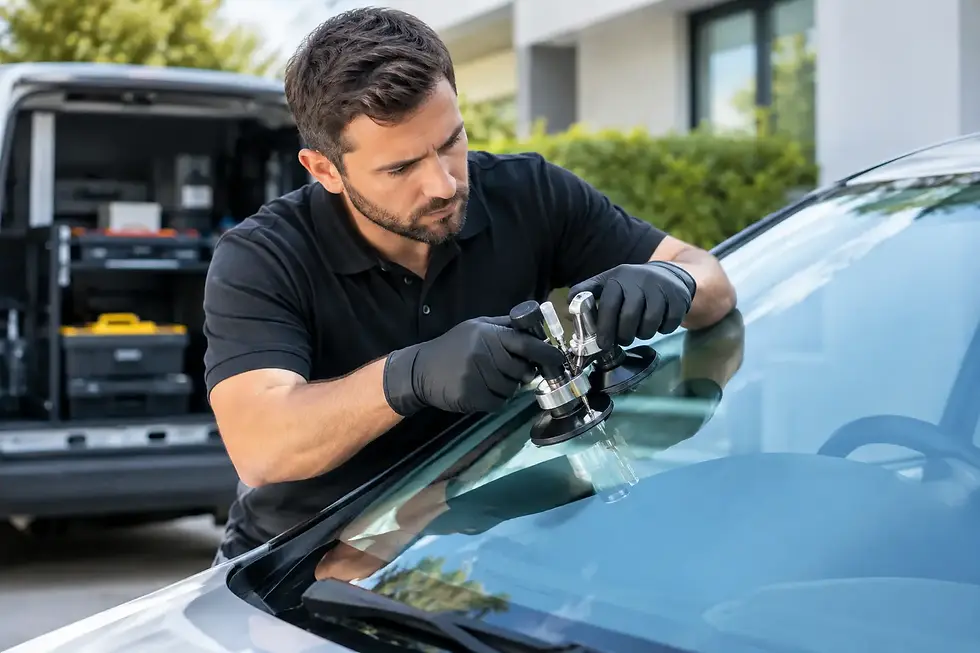
Professional repair resin is formulated for controlled flow and curing. A trained technician chooses the right approach for the shape and condition of the chip, then uses an injector system to create pressure and vacuum at the point of damage. This helps draw air out of the break and pull resin into its fine legs and internal fractures.
A DIY kit normally provides a basic bridge and resin tube. Some kits can produce a reasonable result on a fresh, simple bullseye chip in clean, dry conditions. The difficulty is that windscreens do not always offer ideal conditions. A star break may have several narrow legs. A chip picked up on a wet motorway may contain moisture. Old damage may be full of road dirt. Those are the details that decide whether resin reaches where it needs to go.
Professional resin versus DIY kits: the real differences
The bottle of resin is only part of the job. The larger difference is the process around it.
Assessment comes before repair
A professional starts by deciding whether the windscreen should be repaired at all. Small bullseye, half-moon, petal, star, cross-hair and some short cracks can often be repaired. Damage bigger than a £2 coin, cracks reaching the edge of the windscreen and certain long cracks may not be suitable. In those cases, trying to force a repair can waste time and leave the glass unsafe.
DIY kits cannot make that judgement for you. Their instructions tend to be broad because they must suit many situations. A driver may see a small surface mark, while an experienced Chipper can spot a stress line or contamination that makes the job more involved. This is especially worthwhile on prestige, classic and high-performance vehicles, where retaining the original factory glass is often the priority.
Preparation is where many home repairs fall short
Before resin goes near the glass, the chip must be inspected and prepared. Loose glass, moisture and debris all affect the bond. A repairer can carefully clear the impact point, dry it where appropriate and protect the working area from further contamination.
With a DIY kit, the chip may have sat exposed while the kit was bought or delivered. Dirt and water can work into the break, particularly during British weather. Applying resin over contamination may make the repair look cloudy and can reduce its effectiveness. Once resin has cured, there is no easy reset button.
Pressure and vacuum fill the fine cracks
The visible centre of a chip is rarely the whole story. Star and petal breaks often have tiny fractures spreading out from the impact point. Professional injector equipment cycles between vacuum and pressure so trapped air can be removed and resin can travel through those narrow channels.
DIY bridges can apply pressure, but they are less adjustable and less forgiving if the seal is not right. If air remains inside, the repair may leave visible silvering or fail to stabilise all parts of the break. That does not mean every home repair fails. It means the result is more dependent on the exact chip, conditions and the person applying it.
Controlled curing protects the finish
Resin needs ultraviolet light to cure, but timing matters. Cure it too soon and the material may not have fully reached the fine legs of the break. Leave it uncured for too long and dust, movement or changing light can affect the job. A technician monitors the fill before using a curing lamp, then finishes and polishes the surface so the wiper blade passes smoothly over it.
A kit commonly relies on sunlight. That can be awkward on an overcast day, under a carport or when the repair is attempted late in the afternoon. Strong direct sun can also begin curing resin before a first-time user is ready. It is a small window for error on glass you rely on every day.
When a DIY kit may be a reasonable choice
There is a place for DIY kits. If the chip is very small, fresh, away from the edge and clearly a simple impact break, a careful driver may use one as a short-term option. It may be useful where professional help is not available quickly.
The sensible expectation is not perfection. Do not use a kit on a crack that is spreading, damage close to the edge, a large break or a chip directly in the driver's critical viewing area without first getting professional advice. Do not press on the damaged glass, blast the heater at it or wash the car with a high-pressure lance before it is assessed.
If you decide to try a kit, keep the chip dry and follow its curing instructions exactly. But remember that a poor first repair can make later professional work more difficult. Resin that has cured with air or dirt trapped beneath it cannot simply be removed from every fine fracture.
The practical value of calling a mobile specialist
For most drivers around Hampshire, Surrey and Berkshire, the main benefit is not fancy equipment. It is avoiding the bigger problem. A chip that is repaired promptly may save an entire windscreen from replacement, along with the cost, inconvenience and unnecessary waste that comes with it.
Mobile repair also removes the need to take time off or sit in a waiting room. Send a clear WhatsApp photo of the damage, ideally with a coin nearby for scale, and include which part of the windscreen it is on. A trained technician can give a straight answer on whether it appears repairable before arranging a visit.
Chip Repair UK uses professional-grade Delta repair resin and works to clear repair limits rather than promising every chip can be saved. That matters more than a cheap fix that sounds certain. Where a repair is suitable, fixed pricing and a repair-aftercare guarantee give drivers a clear route forward.
Do not wait for the chip to make the decision for you
Windscreens flex while you drive. Potholes, door slams, frosty mornings and a sudden change from a cold exterior to a warm demister can all put pressure on a damaged area. What was a small chip outside the supermarket can become a long crack by the next commute.
Cover the impact point with a clean, clear chip protector if you have one, keep water out and arrange an assessment as soon as you can. A quick photo to Call Billy can tell you whether professional repair is still on the table - and that is usually the easiest moment to act.


Comments