

Driving with a Damaged Windscreen: Is It Legal?
A stone chip can look harmless when you first spot it on the drive. Then the temperature drops overnight, you turn on the heater, hit a pothole or close the door firmly - and that small mark becomes a crack across the glass. Driving with a damaged windscreen is not something to ignore, particularly when the damage sits in your line of sight.
The sensible question is not simply, “Can I get away with it?” It is whether you can see clearly, whether the windscreen remains safe, and whether a quick repair now could save you from needing a full replacement later.
Is it safe to drive with a damaged windscreen?
It depends on the type, size and position of the damage. A tiny chip away from the driver’s view may not stop you using the car for a short, necessary journey. But any damage can spread without warning. Windscreens flex as the vehicle moves, and rapid changes in temperature put extra pressure on the glass.
A crack or chip can also scatter light from oncoming headlights, low winter sun and street lamps. That is distracting at the best of times. If the damage is directly in front of the driver, it can distort what you see and make judging hazards more difficult.
The windscreen is more than a piece of glass that keeps out rain. In modern vehicles, it contributes to the body’s strength and supports the passenger airbag in a collision. A properly repaired chip helps restore the affected area and prevents contamination getting into the break. Leaving it to spread can turn a straightforward repair into a replacement job.
If you have a long crack, damage at the edge of the windscreen, loose glass, or impaired vision, do not treat it as a minor inconvenience. Avoid driving until the vehicle has been assessed.
Can you fail an MOT for a damaged windscreen?
Yes. MOT rules focus heavily on the driver’s view of the road. The key area is known as Zone A - the central section directly in front of the steering wheel. Damage larger than 10mm in this area can result in a fail.
Elsewhere in the swept area covered by the windscreen wipers, damage larger than 40mm may also fail. Those measurements are useful as a guide, but they are not a reason to wait until a chip reaches the limit. A chip can become a crack in one journey, and an MOT tester may also consider whether the damage affects visibility.
There is also the everyday legal point: your vehicle must be in a roadworthy condition. If a damaged windscreen obstructs your view or makes the vehicle unsafe, continuing to drive could leave you exposed to more than an inconvenient MOT failure.
A repair is often far quicker and cheaper than finding the problem just before test day.
What windscreen damage can usually be repaired?
Many stone chips are repairable if dealt with promptly. Common repairable types include bullseye, half-moon, petal, star and cross-hair chips, along with small long cracks. The best candidates are clean, contained breaks that have not reached the edge of the glass.
As a practical rule, damage larger than a £2 coin, edge cracks and long spreading cracks are generally beyond normal chip-repair limits. The exact answer depends on the shape of the impact, its location and whether dirt or moisture has entered it.
This is why a clear photo is so useful. A trained chip repair specialist can often give an initial view from a WhatsApp image, then confirm the damage in person. It saves wasted journeys and gives you a straightforward answer before you book.
Why the edge of the windscreen matters
The outer edge is under greater stress because it is where the glass is bonded into the vehicle. A crack that reaches this area is more likely to continue travelling. Even if it looks short today, it may not remain that way after a motorway run, a frosty morning or a bump in the road.
Why fresh chips are easier to repair
A newly damaged windscreen is usually cleaner. Over time, water, screenwash, dust and road grime work into the break. That does not automatically make repair impossible, but it can affect the cosmetic result.
Covering a fresh chip with a small piece of clear tape can help keep it dry and clean until it is inspected. Do not press tape into the damage, poke at the glass or use a DIY kit if you are unsure what you are dealing with. An unsuccessful home repair can make professional assessment more difficult.
What to do when a stone chip appears
First, take a moment to check where it is. Look from both inside and outside the vehicle, but do not run your fingers over sharp or damaged glass. If it is in the driver’s direct view, has started cracking, or affects what you can see, limit use of the vehicle and arrange an assessment promptly.
Keep the affected area dry where possible. Avoid blasting the windscreen with very hot air when it is freezing outside, and do not pour hot water over cold glass. Sudden temperature changes can encourage a chip to spread.
It is also worth avoiding car washes until you have had advice. High-pressure water can force moisture and dirt into the break. Normal careful driving may be unavoidable, but delaying the repair for weeks is a gamble that often ends in replacement.
Why repair is usually the better first move
When a chip is eligible, repair preserves the original factory windscreen. That matters to owners of newer, prestige, classic and performance vehicles, where keeping the original glass is often preferable to fitting a replacement unnecessarily.
It is also the lower-waste option. Replacing a complete windscreen for a small impact mark creates more waste and can involve extra time, recalibration work on vehicles with advanced driver-assistance systems, and disruption to your day.
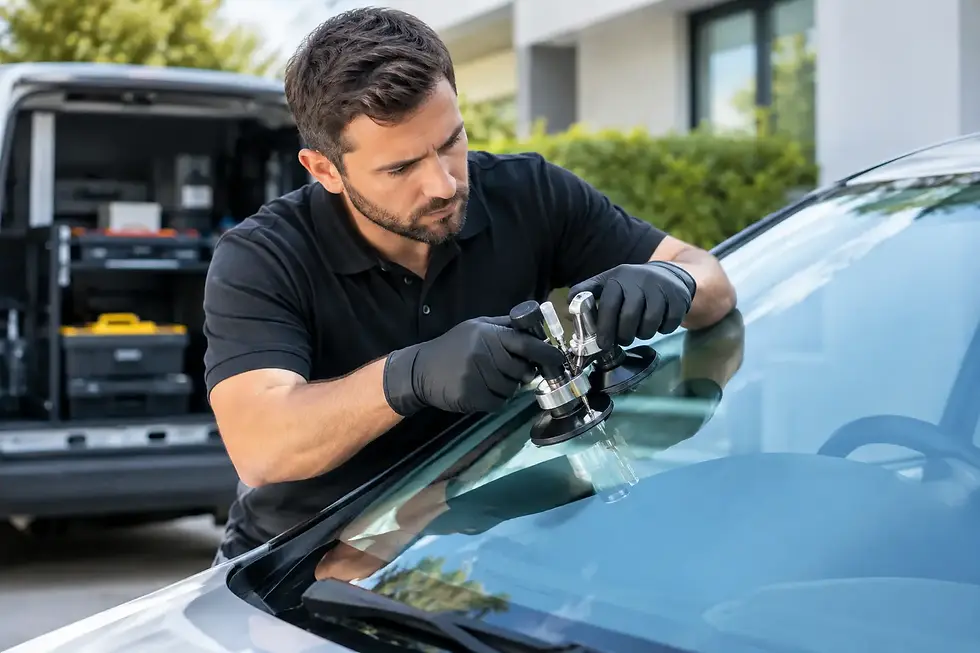
A mobile chip repair specialist can carry out many eligible repairs at your home or workplace in around 20 to 30 minutes. The process uses professional resin, drawn into the damaged area under pressure and cured to strengthen the glass. A good repair will make the chip far less noticeable, although no honest technician should promise that every mark will disappear completely. Structural improvement and stopping the damage spreading are the priority.
Do not wait for the crack to make the decision
The awkward truth about windscreen damage is that timing matters. A chip that is repairable on Monday may be a replacement job after a cold, wet week of commuting. The cost difference and inconvenience can be considerable.
For drivers across Hampshire, Surrey and Berkshire, the easiest next step is to take a clear photo of the damage from outside the vehicle and send it for assessment. Include a £2 coin nearby for scale if you can, and mention whether the damage has spread or sits near the edge.
Chip Repair UK is a mobile chip repair specialist, so there is no need to spend half a day at a workshop for an eligible repair. Call Billy or send a WhatsApp photo for a clear answer. Acting while the damage is still small gives you the best chance of keeping your existing windscreen - and getting back on the road with one less thing to worry about.


Comments