

Windscreen MOT Rules That Can Fail Your Car
A stone chip can look small enough to ignore - right up until MOT time. The good news is that windscreen MOT rules are clear on the areas that matter most. The less helpful news is that a chip does not have to become a long crack before it causes a problem.
If you have spotted damage while commuting through Fleet, travelling to work in Farnborough or loading the family car in Bracknell, deal with it sooner rather than later. A prompt repair may help protect your original glass, keep your view clear and avoid the inconvenience of finding a fault on test day.
The windscreen MOT rules in plain English
During an MOT, the tester checks whether you have a clear view of the road. They will look at the windscreen for chips, cracks and other damage in the area swept by the wipers.
The key area is called Zone A. This is a vertical strip 290mm wide, centred on the steering wheel. It is essentially the most critical part of the driver's forward view. Damage larger than 10mm in Zone A is likely to result in an MOT failure.
The rest of the wiper-swept area is often referred to as Zone B. In this wider area, damage larger than 40mm can fail the test. That means a sizeable chip or crack in front of the passenger may still matter if it sits where the wipers clear the glass.
The tester will also consider whether scratches, discolouration or other defects seriously affect your vision. A clean, clear screen matters just as much as the size of the visible chip.
Why the chip's position matters as much as its size
A tiny bullseye outside the driver's direct line of sight may be repairable and well within MOT limits. The same-sized damage in Zone A needs a closer look, particularly if it has spread or has a loose, broken centre.
It is not sensible to judge this by eye from the driver's seat alone. The apparent size can be misleading, especially with star breaks, petal chips and cracks radiating from a central impact point. A crack may also be longer than it first appears once dirt and moisture have worked into it.
This is why an MOT pass and a suitable repair are not exactly the same question. MOT rules set minimum roadworthiness standards. A trained repair specialist also assesses the type of break, how deep it is, whether it is contaminated, how close it is to the edge and whether the repair can give a safe, worthwhile result.
Will a repaired windscreen pass an MOT?
A professionally repaired chip can pass an MOT if the finished windscreen meets the required standard. The repair should not leave damage over the relevant size limit, and it must not create a serious impairment to the driver's view.
A windscreen repair is designed to stabilise the damaged area and restore strength, not make every mark disappear completely. Most repairs leave a faint trace when viewed closely. That is normal. What matters is whether the screen remains safe, the damage is contained and the driver's vision is not materially affected.
The closer damage is to Zone A, the more cautious the assessment should be. A repair may still be technically possible, but it depends on the exact chip and the quality of the finish. If the damage is directly in your eyeline, the right answer is an honest assessment, not a promise that every repair will be invisible.
Chips and cracks that need attention before the test
Do not wait for the MOT if a chip has legs spreading out from it, if a crack is getting longer or if the damage is close to the windscreen edge. Temperature changes, potholes, door slams and the body flexing over uneven roads can all turn manageable damage into a full-screen crack.
Common repairable damage can include bullseye, half-moon, petal, star and cross-hair chips, as well as some small long cracks. Eligibility always depends on the individual screen. Damage larger than a £2 coin, edge cracks and heavily contaminated breaks are less likely to be suitable for a chip repair.
There is a practical reason to act quickly. Once water and road grime enter the break, it becomes harder to achieve a clean repair. Avoid washing the car or using a high-pressure jet directly over a fresh chip if you can. Keep the area dry, do not pick at loose glass and avoid blasting the demister onto an icy screen with damage in it.
What else can fail a windscreen MOT?
A chip is not the only issue. Your tester needs a clear view through the screen, so take a minute to check the basics before the appointment. Wipers that smear rather than clear, a washer bottle that is empty, or excessive scratches from worn blades can all create trouble.
Stickers, sat-nav mounts, dash cameras and air fresheners should not obstruct the driver's view. A parking permit or toll tag is usually best kept out of the critical viewing area. If you are unsure, remove temporary items before the test rather than asking the tester to work around them.
Also inspect the wiper blades. Grit trapped beneath a damaged blade can score the glass over time, and heavy scoring can be more difficult to live with than a single stone chip. Replacing worn blades is inexpensive compared with replacing a windscreen.
A quick check before your MOT
Start with a clean, dry windscreen in daylight. Look from outside the vehicle first, then sit in the driver's seat and check where the damage falls in relation to your natural line of sight. Measure the widest part of the damaged area, not just the central point where the stone hit.
Next, run the wipers and washers. You are checking that they clear the screen effectively and that the swept area is easy to see through. Finally, look for any crack that reaches towards the edge or appears to have grown since you first noticed it.
Do not cover a chip with tape immediately before the MOT in an attempt to hide it. It does not fix the damage and may leave the tester unable to assess the glass properly. If you need to protect a fresh chip before a repair, a small clear protective patch applied early can help keep dirt out, but it should be removed before the vehicle is inspected.
Repair before replacement where it is suitable
Replacing a windscreen can be necessary, particularly where there is major cracking, edge damage or a break in a critical area that cannot be repaired to a suitable standard. But replacement is not automatically the answer to every chip.
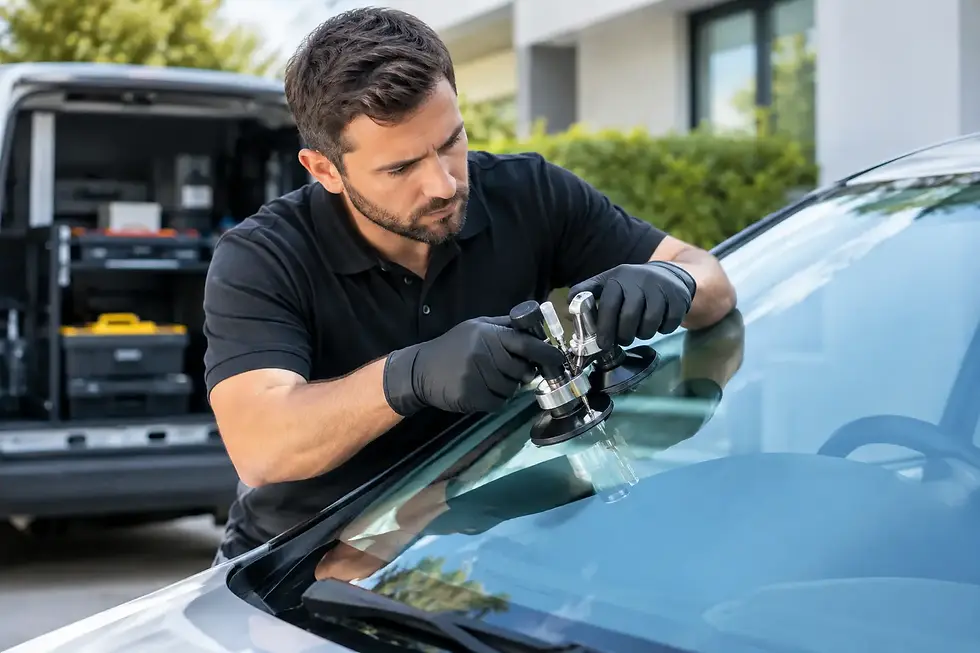
For eligible damage, mobile chip repair is usually quicker, lower waste and far less disruptive than changing the entire screen. A trained specialist can assess a clear photograph first, then come to your home or workplace if the chip is suitable. Most straightforward repairs take around 20 to 30 minutes, so there is no need to lose a day sitting in a workshop.
Chip Repair UK uses professional Delta repair resin to fill and stabilise suitable chips, helping to preserve the original factory-fitted glass where possible. That can be particularly valuable on prestige, classic and high-performance vehicles, where keeping original glass is often preferable.
If your MOT is close, send a clear photo of the damage for an assessment before you book the test. Include a wider picture showing where it sits on the windscreen, not only a close-up. A straight answer now is better than an avoidable failure later - and a small chip is always easier to deal with before the next cold morning or motorway journey turns it into something bigger.


Comments