

7 Signs Glass Damage Is Urgent in Your Car
A stone flicks up on the M3, you hear the tap, and there it is: a small mark in the windscreen. The signs glass damage is urgent are not always dramatic. A chip can look harmless on the drive, then turn into a long crack after a cold night, a hot demister or one sharp pothole.
The good news is that many fresh chips can be repaired quickly. The key is knowing when to stop putting it off. Acting early can help preserve your original factory glass, avoid the cost and disruption of replacement, and keep the damage from spreading across your view of the road.
Signs glass damage is urgent: do not wait for a crack
The clearest warning sign is any damage that is changing. If a chip has thin lines running from it, or a line has become longer since you first noticed it, get it assessed straight away. Vibration from normal driving puts stress through the windscreen, particularly over rough roads, speed bumps and potholes. Temperature changes do the same.
A chip that has become a crack is more urgent still. Windscreens are laminated, so they are designed to remain together on impact, but a spreading crack can compromise the glass and move beyond a practical repair limit. Once it runs towards the edge of the windscreen, replacement is often the only option.
Location matters as much as appearance. Damage directly in the driver’s main viewing area needs prompt professional advice, even if it is small. It can catch headlights, sunlight and rain at exactly the wrong moment. Depending on its size and position, it may also affect the vehicle’s MOT suitability.
Do not judge a chip only by its width. A compact bullseye or star can have hidden legs beneath the surface. If the centre looks dark, the impact point is deep, or there are several cracks radiating outwards, it is worth sending a clear photo before driving any farther than necessary.
The warning signs drivers often miss
A chip does not need to be large to be time-sensitive. These are the situations that commonly turn a repairable mark into a replacement job.
The chip is near the windscreen edge
The outer area of a windscreen is under more stress because it is bonded into the vehicle body. Cracks at or close to the edge are much more likely to travel. Edge cracks are generally outside normal chip-repair limits, so do not wait to see whether it settles down.
The weather has turned cold or hot
Rapid temperature change is hard on damaged glass. Blasting the heater or air conditioning directly at a chipped windscreen can make an existing fracture move. On frosty mornings, avoid pouring hot water over the screen and do not use the demister at full heat immediately.
The same applies in summer. A windscreen that has been baking in a car park, then cooled suddenly by air conditioning, can put extra pressure on a chip. Use gradual temperature changes until the damage has been inspected.
Dirt or water has got into the break
Fresh, clean damage gives a trained Chipper the best chance of a tidy, effective repair. Once road grime, screen wash, rainwater or moisture gets inside the break, the finished appearance can be less predictable. The repair may still be possible, but waiting rarely improves the outcome.
If you have clear windscreen-repair tape, cover the outside of the chip lightly to keep contamination out. Do not press sticky tape into the break, and do not use household glue, nail varnish or DIY resin kits. These can trap dirt, make a professional assessment harder and leave the damage looking worse.
More than one line is coming from the impact point
Star breaks, cross-hair chips and petal-shaped damage can often be repaired when caught early. But each visible leg is a route for the crack to extend. A chip with growing lines needs swift attention, particularly if you commute daily or regularly use fast roads around Fleet, Farnborough, Camberley or Basingstoke.
What is usually repairable, and what is not?
There is no honest way to confirm a repair from a description alone. A photo assessment is the quickest first step because the size, position, type of break and cleanliness all matter.
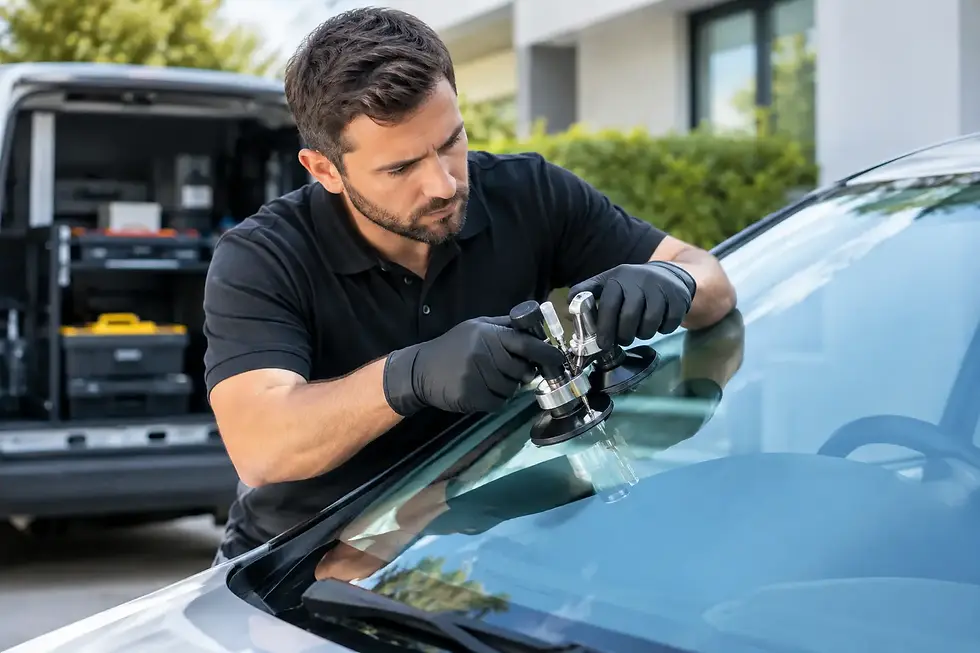
In many cases, a bullseye, half-moon, petal, star or cross-hair chip can be repaired. Small long cracks may also be suitable, depending on their length and location. A professional repair injects specialist resin into the damaged area, helping to restore the windscreen’s integrity and reduce the visible mark. It will not make every chip disappear completely, especially if the damage is old or dirty, but it can stop further spread and improve the appearance.
There are clear limits. Damage larger than a £2 coin, cracks running from the edge, and damage that has travelled too far are unlikely to be suitable for chip repair. In those circumstances, replacement may be necessary. It is better to hear that clearly at the start than pay for an attempted fix that cannot deliver a sound result.
What to do in the first 10 minutes
First, take a photo from outside the vehicle, then another from inside if the damage is visible. Include a £1 or £2 coin beside the chip for scale, but do not place it on the glass if the area is wet or unstable. Good daylight photos are ideal.
Next, keep the windscreen dry and avoid washing the car. Drive gently if you must travel, leave extra space from lorries and avoid slamming doors. A sharp door closure can flex the bodywork enough to extend an already stressed chip.
Finally, arrange an assessment rather than waiting for the weekend. A mobile chip repair specialist can often tell from WhatsApp photos whether the damage appears eligible, then come to your home or workplace. That saves a trip to a workshop and usually means the vehicle is back in use far sooner.
Why a quick repair is usually the cheaper choice
A windscreen replacement is not just a larger bill. It can mean losing original factory glass, arranging a fitting appointment and, on newer vehicles, dealing with cameras or sensors that may require calibration afterwards. Repair avoids much of that disruption when the damage is within repair limits.
It is also the lower-waste option. Repairing a small impact mark preserves a serviceable windscreen rather than sending a large piece of laminated glass into the replacement cycle. For owners of classic, prestige and performance vehicles, keeping the original screen can be especially worthwhile where the correct glass is harder to source.
At Chip Repair UK, eligible mobile repairs are normally completed in around 20 to 30 minutes using professional-grade Delta repair resin. Pricing is clear, and a photo first means there is less guesswork before booking. Coverage includes Hampshire, Surrey and Berkshire, with home and workplace appointments designed around the way you use your car.
Can you still drive with a windscreen chip?
Sometimes, but treat it as a short-term situation rather than permission to ignore it. A small, stable chip away from the driver’s view may remain repairable for a while. Yet no one can promise it will stay that way after a motorway journey, a frosty morning or a pothole.
If the crack is spreading, sits near the edge, affects your view or has become large, reduce driving and seek advice promptly. If you are unsure, send a photo and ask. A straightforward assessment is far better than discovering the crack has crossed the screen when you need the car most.
A chip is easiest to deal with when it is still just a chip. Cover it if needed, keep temperature changes gentle, and get a clear professional answer before one small impact becomes a much bigger interruption.


Comments