

Resin Repair Versus Replacement Explained
A stone chip can look minor at first - often no more than a small mark that catches the light. Leave it through a cold night, a hot windscreen or a sharp bump in the road, however, and it can spread into a crack. That is why resin repair versus replacement is not simply a question of price. It is about acting while your existing windscreen can still be saved.
For many drivers in Hampshire, Surrey and Berkshire, a professional mobile chip repair is the sensible first option. It is quicker, lower cost and avoids throwing away a sound factory-fitted windscreen. But repair is not right for every type of damage. A trained assessment gives you a straight answer before any work begins.
Resin repair versus replacement: the key difference
Resin repair treats localised damage in the outer layer of laminated windscreen glass. A trained technician cleans and prepares the impact point, removes air and moisture where possible, then injects a specialist clear resin under controlled pressure. The resin is cured with ultraviolet light and polished, helping to restore strength and prevent the damage from travelling.
Replacement means removing the complete windscreen and fitting new glass. That is sometimes essential, particularly where the damage affects a critical area or has spread too far. It is also a larger job, with more cost, more disruption and more material waste than a successful chip repair.
The right choice depends on the chip's size, type and location, rather than how alarming it looks from the driver's seat. A star break may have several visible legs but still be repairable. A tiny crack at the edge of the glass may not be.
When resin repair is usually the better answer
A repair is normally worth considering when the impact damage is small, contained and away from the edge of the windscreen. Common repairable types include bullseye, half-moon, petal, star and cross-hair chips, plus certain small long cracks. As a clear rule of thumb, damage larger than a £2 coin is generally beyond normal repair limits.
The biggest advantage is speed. Most eligible mobile repairs take around 20 to 30 minutes, so you can have the work carried out at home or at work rather than losing time at a fitting centre. For commuters, parents and anyone who depends on their car every day, that matters.
There is a preservation benefit too. Original glass is often the best fit for the vehicle it was made for. This can be particularly valuable on prestige, classic and high-performance cars, where owners understandably want to retain factory glass if it can be safely repaired. Repair also avoids the waste of replacing an entire windscreen over one small impact point.
A correctly completed repair is designed to restore structural integrity and stop the chip developing into a bigger problem. It will not always make the mark disappear completely. Most repairs leave a faint blemish or small shadow, particularly if dirt or water entered the break before it was treated. The goal is a sound, stable repair - not an invisible cosmetic touch-up.
When windscreen replacement is the safer route
Replacement is the proper answer when damage has crossed the repair threshold. Cracks that begin at, or run into, the edge of the windscreen are a common example. The edge is an area of higher stress, so an edge crack is more likely to continue spreading even if resin is applied.
A long or wide crack, damage larger than a £2 coin, multiple closely grouped impacts, and chips that have become heavily contaminated can also rule out repair. The same applies if the damage sits in a position where a repair would leave an unacceptable visual disturbance in the driver's critical viewing area.
Modern vehicles add another consideration. If your car has a camera or driver-assistance equipment mounted behind the windscreen, a replacement may require correct calibration afterwards. That does not mean every chip needs a new screen. It simply means replacement is a more involved job when it is genuinely needed.
There is no benefit in forcing a repair that falls outside safe limits. A dependable specialist should say so clearly. Honest advice protects you from paying for work that is unlikely to last and helps you arrange the correct next step.
Why time matters more than the chip's appearance
The best time to repair a stone chip is before it has had the chance to change. Temperature swings make the glass expand and contract. Demisting a cold screen, a heatwave, a pothole or a slammed car door can add enough stress for a chip to turn into a crack.
Moisture and road grime are another problem. Once contamination works its way into the break, it can affect the final appearance of the repair. It may still be possible to stabilise the damage, but the clearer result is often achieved when the chip is fresh and dry.
If you have just picked up a chip, do not poke at it or wash it aggressively. Keep the area dry where possible and avoid blasting the windscreen with very hot air. A small piece of clear tape placed gently over dry damage can help keep dirt out until it is assessed. Do not use tape if the glass is wet, as that can trap moisture inside.
What happens during a mobile resin repair
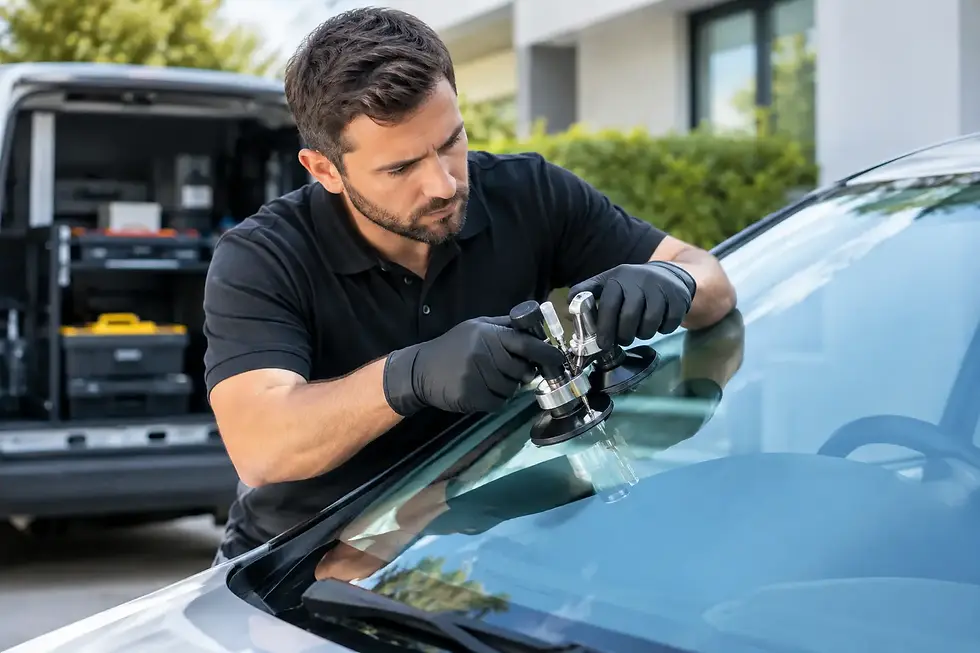
A proper repair is a controlled process, not a quick squirt of glue. The technician first checks the chip type, measurements and location to confirm it is suitable. The area is cleaned and prepared, then a professional repair bridge is positioned over the impact point.
Specialist Delta repair resin is introduced into the break so that it can fill the damaged section of glass. The technician works the resin into the legs of a star, the ring of a bullseye or the relevant fracture lines, depending on the pattern. It is then cured under ultraviolet light and finished carefully.
The windscreen remains in place throughout. There is no need to remove trims, disturb bonded glass or wait for a newly fitted screen to settle. That is why repair is often the least disruptive option when damage is eligible.
Repair cost versus the real cost of waiting
A chip repair has a fixed, straightforward purpose: deal with small damage before it becomes a full-screen expense. Replacement can cost significantly more, may take longer to arrange and creates a larger interruption to your day. If the car needs specialist glass or post-fit camera calibration, the difference can become greater still.
That said, the cheapest option is not automatically the correct one. If a crack is too large, reaches the edge or cannot be repaired safely, replacement is necessary. The money-saving decision is getting an accurate assessment early, not hoping unsuitable damage will hold together.
For drivers who are unsure, a clear photo is often enough to make a first assessment. Take it from outside the vehicle if you can, include a £2 coin beside the damage for scale, and show the nearest edge of the windscreen. A WhatsApp photo makes it easier to confirm whether a mobile repair is likely before you book.
A simple way to decide what to do next
If the chip is small, contained and away from the edge, arrange an assessment as soon as you can. If it is larger than a £2 coin, starts at the edge, has spread into a substantial crack or sits where clear vision is affected, assume replacement may be required until a professional says otherwise.
Chip Repair UK focuses on the repairable jobs - the bullseyes, stars, petals, half-moons and small cracks that can often be saved in around half an hour at your home or workplace. If it is outside repair limits, you will be told plainly rather than sold a false fix.
A windscreen chip rarely improves by being ignored. Send a clear photo while it is still small, get a straight answer, and give your original windscreen the best chance of staying on the car.


Comments