

Small Windscreen Crack Repair Before It Spreads
A small crack in your windscreen rarely stays small for long. One cold morning, a pothole, a slammed door or a change from shade to direct sun can turn a repairable mark into a crack across the glass. Small windscreen crack repair is about acting while the damage is still within repair limits - saving the original windscreen, avoiding the disruption of replacement and getting back on the road quickly.
For drivers across Hampshire, Surrey and Berkshire, the first step is simple: take a clear photo of the damage and send it by WhatsApp for an honest assessment. If it can be repaired, a trained mobile chip repair specialist can usually come to your home or workplace and complete the job in around 20-30 minutes.
Can a small windscreen crack be repaired?
Often, yes. But it depends on the crack's size, position and shape. A small long crack may be suitable for repair when it is short, contained and away from the edge of the windscreen. Stone damage can also create a bullseye, half-moon, petal, star or cross-hair break, sometimes with short cracks running from the impact point.
The key question is not simply whether you can see a line in the glass. It is whether the damage is still stable enough for repair resin to penetrate and bond the damaged area. A professional assessment looks at the full break, including fine legs that may be hard to spot in a photograph.
As a straightforward rule, damage larger than a £2 coin is usually beyond sensible repair limits. Cracks reaching the edge of the windscreen are also a concern because the edge is under greater stress and the crack is more likely to continue travelling. In those cases, replacement may be the safer option.
A photo assessment gives you clarity before anyone travels. Take the picture from outside the vehicle, include a coin for scale where possible, and send a second wider shot to show where the damage sits on the windscreen.
Why small windscreen crack repair should not wait
A windscreen is not just a piece of glass in front of you. It contributes to the vehicle's structure and supports the roof in a serious impact. Modern laminated windscreens are made from layers, and a stone strike can damage the outer layer while leaving a visible point or crack on the surface.
Left alone, contamination and movement make a repair harder. Water, road grime and screenwash can work into the break. Temperature changes expand and contract the glass. Even using the demister on a cold morning can put extra stress around existing damage.
That does not mean every chip becomes an emergency on the spot. It does mean it is worth arranging an assessment promptly, rather than waiting to see whether it grows. A repair carried out early is generally more predictable, less disruptive and far less wasteful than replacing a complete windscreen.
If the damage has just happened, avoid pressing on it or trying to pick out loose glass. Keep the area as dry and clean as practical. A small piece of clear tape over the outside can help stop dirt entering before your appointment, provided the glass is dry when applied.
What happens during a mobile repair?
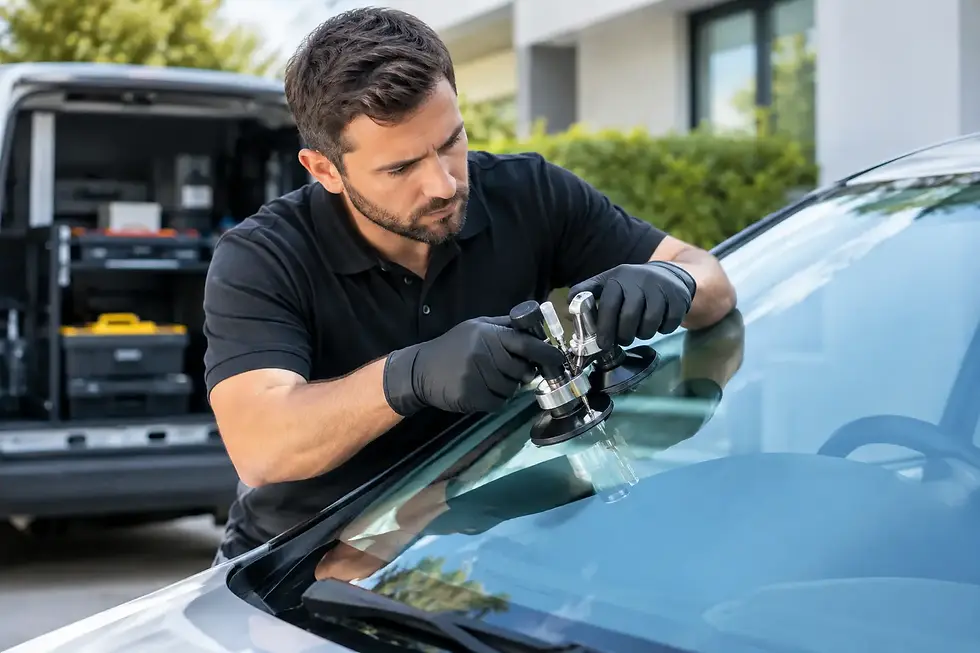
A proper repair is more than putting filler over the top of a crack. The technician first checks that the damage is suitable and makes the area ready for repair. A professional bridge and injector system is then used to apply controlled pressure and vacuum, helping specialist resin reach into the damaged section of the glass.
At Chip Repair UK, trained Chippers use professional-grade Delta repair resin. The resin is cured under UV light, then the surface is finished and polished. The aim is to restore strength in the damaged area and reduce the risk of the crack spreading.
Most eligible repairs take around 20-30 minutes. You do not need to sit in a workshop waiting room or organise a lift home. A mobile appointment can be arranged at your driveway or workplace, provided the technician has safe access to the vehicle and suitable conditions to carry out the work.
The finished repair will not always disappear completely. This is glass repair, not a cosmetic replacement. Many repairs leave a small blemish or shadow, particularly where dirt entered before treatment or the impact was severe. What matters most is that the damage is stabilised and the windscreen keeps doing its job.
When repair is not the right answer
A dependable specialist should be clear about limits, not try to repair every piece of damage that comes along. A crack may need replacement if it is too long, larger than a £2 coin, extends from the edge, sits in a particularly sensitive position, or has already spread through the glass in a way that cannot be safely stabilised.
Damage directly in the driver's critical viewing area also needs careful judgement. Even where a repair is technically possible, a noticeable mark could be distracting. The condition of the glass matters too. Deep scratches, multiple nearby impacts and old contaminated breaks can all affect the result.
This is why a clear photo is useful, but an in-person inspection remains the final check. If the damage is outside repair thresholds, you should be told plainly before work begins. Paying for a repair that has little chance of lasting is not good value for anyone.
Repair versus replacement: the practical difference
Replacing a windscreen can be necessary, but it is a bigger job. It can involve removing the existing glass, fitting new glass, allowing adhesives to cure and, on many newer vehicles, recalibrating cameras or driver-assistance systems. It may also mean losing the original factory-fitted windscreen.
Repair preserves the glass already fitted to your car. For owners of classic, prestige and high-performance vehicles, that can be a real advantage. It also avoids sending an entire windscreen into the waste stream when only one small area has been damaged.
Cost is another consideration. Mobile chip repair has lower overheads than a full replacement operation, and a fixed-price repair can make the decision straightforward. The exact charge depends on the number, type and size of chips, so it is best to ask for confirmation before booking.
Booking a repair at home or work
There is no need to guess whether your crack is repairable. Send a WhatsApp photo, call Billy, or make contact with the details of your vehicle and location. Include how long the damage has been there if you know, and mention whether the crack has changed since it happened.
Appointments are available across local areas including Fleet, Farnborough, Aldershot, Camberley, Bracknell, Basingstoke, Maidenhead and Ascot, along with surrounding parts of Hampshire, Surrey and Berkshire. A mobile service is designed around the places your car already needs to be.
Before the visit, avoid washing the windscreen or soaking the damaged area. If rain is expected, ask about suitable cover or whether a different appointment time would give the best repair conditions. The technician will confirm the damage is eligible before starting and explain what result you can reasonably expect.
Aftercare once the repair is complete
Once the resin has cured, you can normally use the vehicle straight away. Treat the repaired area as you would the rest of the windscreen, but do not be surprised if you can still find the original impact point in certain light. The visual result depends on the type of break, its age and how clean it was when repaired.
A quality repair comes with aftercare reassurance. If the repaired damage later develops further under the terms of the guarantee, you have a clear route back to the specialist who completed the work. That is far better than an anonymous quick fix with no accountability.
The useful move is the simple one: take a photo while the crack is still small, get a straight answer, and give your original windscreen the best chance of staying in place.


Comments