
Professional Repair Quality Review: What Matters
A stone chip can look minor at first, then become the reason you need a whole new windscreen. A professional repair quality review is not about whether the mark disappears completely. It is about whether the damage has been properly assessed, stabilised and filled before it spreads across the glass.
For drivers in Hampshire, Surrey and Berkshire, the best result is usually quick, honest action. Send a clear WhatsApp photo, get the chip checked by a trained specialist, and repair it while it is still within safe limits. That can save the original screen, avoid the cost and disruption of replacement, and keep your car on the road.
What a professional repair quality review should check
A proper review starts before any resin is used. The repairer needs to identify the chip type, its size, its position and whether moisture or dirt has entered the break. A bullseye, half-moon, petal, star or small cross-hair chip may often be repairable. Small long cracks can sometimes be repaired too, depending on their length and location.
The limits matter. Damage near the edge of the windscreen is more likely to spread because the glass is under greater stress there. A crack larger than a £2 coin, an edge crack, or damage that has already travelled too far is not a candidate for a standard chip repair. Any repairer promising to fix every mark without seeing it first is not giving you a useful answer.
The windscreen is a laminated safety component, not simply a pane of glass. It supports visibility and contributes to the vehicle's structure. A quality review therefore considers both the appearance of the repair and the likelihood of the chip developing into a crack.
Repairable does not mean invisible
This is the point many drivers understandably want clarified. Even a very good windscreen repair can leave a faint blemish, particularly if the chip has been open for several days or has collected road grime. The aim is to make the damage far less noticeable and, more importantly, restore strength to the affected area.
A clear repair is a welcome outcome, but it should not be confused with a guarantee that there will be no trace at all. The quality of the resin, the repairer's technique and the condition of the chip all affect the finished look. A straight answer at the assessment stage is worth more than an unrealistic promise.
How a quality chip repair is carried out
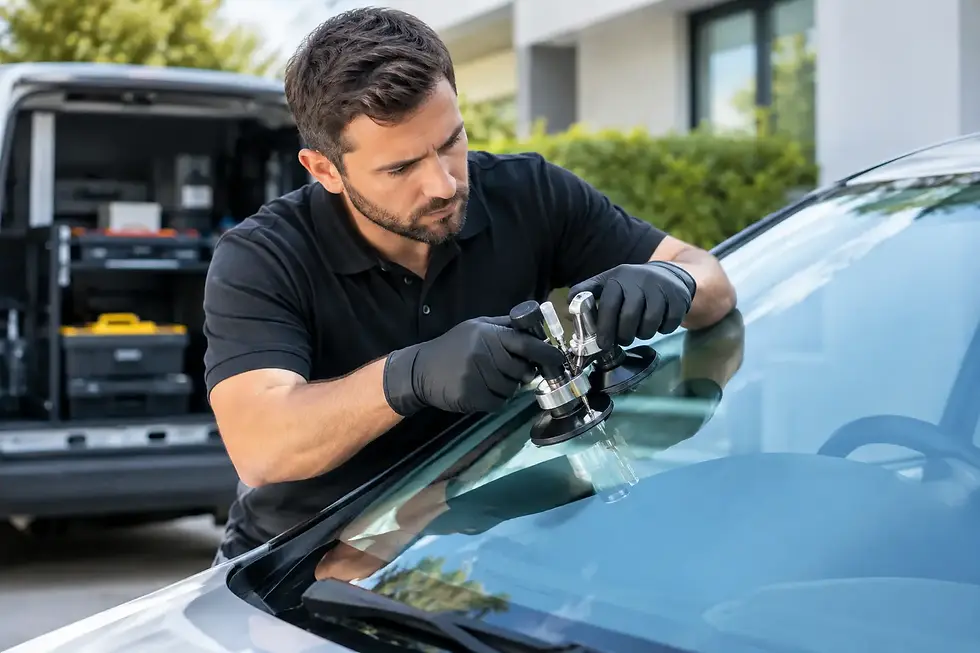
Once the chip is confirmed as suitable, the repair should be calm and methodical rather than rushed. The damaged area is cleaned and prepared, then a purpose-made bridge is positioned over the impact point. Vacuum and pressure cycles help draw air from the break and introduce professional-grade repair resin into the damaged channels.
At Chip Repair UK, trained Chippers use Delta repair resin designed for windscreen chip work. Resin choice matters because it needs to flow into the break effectively, cure correctly and support the glass once hardened. The repairer then uses ultraviolet light to cure the resin before finishing and smoothing the surface.
Most eligible repairs take around 20 to 30 minutes at your home or workplace. That speed is convenient, but it should not mean corners are cut. The technician still needs time to assess the chip, ensure the resin has reached the relevant legs of a star or crack, cure it fully and inspect the result.
A mobile repair can be every bit as professional as a workshop repair when the equipment, materials and process are right. The difference is that you do not need to arrange a lift, wait around at a depot or lose half a day from work.
Signs the repair has been done properly
You do not need specialist equipment to understand the basics of repair quality. Once the work is complete, the chip should feel smooth rather than sharp or cratered. The impact point may still be visible, but the radiating lines should be much less obvious than before and should no longer look open or silvery.
A good repairer will show you the result, explain any remaining cosmetic mark and tell you what happens if there is a problem later. They will not pretend a dirty, old or complex chip will look brand new. They should also be clear about their aftercare guarantee and the practical limits of the work.
The repair should be judged on three things: the chip has been filled as fully as conditions allow, the surface has been finished safely, and the risk of the damage spreading has been reduced. Perfect cosmetic clarity is possible in some cases, but it is not the only measure of a successful job.
Questions worth asking before you book
Ask whether your specific chip is within the repair limits, rather than relying on a generic price or a guess from across a car park. A photo sent in good daylight, taken close enough to show the damage and far enough back to show its position on the screen, gives a specialist a much better starting point.
It is also sensible to ask whether the price is fixed for your type and number of chips, how long the appointment will take, and whether the work is guaranteed. Clear answers protect you from unexpected charges and help you decide whether repair is genuinely the right route.
For prestige, classic and performance vehicles, preserving factory-fitted glass can be especially valuable. Original windscreens may carry manufacturer markings, integrated features or be harder to source than expected. When the damage is eligible, a careful chip repair is often the lower-waste option and avoids disturbing the original screen.
What can affect the finished result
Time is the biggest factor you control. Every journey after a chip appears adds vibration, temperature changes and the chance of contamination. A warm windscreen followed by cold rain, or a blast from the demister on a frosty morning, can be enough to turn a small chip into a long crack.
Keep the damaged area clean and dry where possible. Do not poke at it, wash it with high-pressure water or apply household glue. A small clear chip protector can help keep dirt out while you arrange an assessment, but it is not a substitute for repair.
Weather may affect the appointment too. Heavy rain makes it harder to keep the chip dry, while extreme cold or heat can place more stress on damaged glass. An experienced mobile specialist will advise if conditions mean it is better to wait briefly, move the vehicle under cover or take a different approach.
There is also a trade-off between acting early and waiting for an insurer or replacement booking. If the chip is clearly repairable, prompt repair is usually the simplest way to prevent a larger bill. If it is already beyond the accepted limits, honesty is still the right result - a poor repair attempt cannot make unsuitable damage safe.
Choose assessment over guesswork
A windscreen chip is easy to put off because the car still drives normally. The risk is that the decision gets made for you when the crack spreads, often at the worst possible time. What could have been a short mobile appointment can become a replacement job, time off the road and a much higher cost.
Take a photo as soon as you notice the damage and ask for a straight assessment. Call Billy or send the image by WhatsApp with your location and vehicle details. You will know whether the chip is suitable, what the repair will cost and when it can be done.
The useful test is simple: a quality repair should leave you with a stronger, smoother windscreen and confidence that you dealt with the problem before it became a bigger one. If your chip is still small, do not wait for it to prove otherwise.


Comments